
The other day a customer reached out about setup details for his second Pantheon. That always excites me — both because I love getting into the weeds on a setup, and because a second board means we made a real impression with the first one. It’s a signal that we’re doing it right.
He mentioned that what originally drew him in was an article I wrote about manufacturing in China — and specifically the argument I made that commerce is a real means of bringing people together. That we’re not so different from one another. Most of us want the same things: to provide for ourselves and our families, to spend time doing what’s meaningful to us, to be inspired. Regardless of which side of any border we stand on — between states, between countries, or across the street — we are not all that different. Our individual perspectives are shaped by our individual experiences, but we are driven by the same motivators. We want very similar things.
That idea has stayed with me. I want to push on it a little more.
For me, it starts with the people who make the boards.
We didn’t find our factories through Alibaba. We don’t chase pricing from supplier to supplier or squeeze for discounts on larger orders. We’re a small, product-focused company, and the relationships we’ve built in China reflect that. Our board manufacturer came through a personal recommendation from a friend. They were already making snowboards, surfboards, and skateboards, but advanced longboards were newer territory for them. We helped them hone the details, pushing on quality and precision over several years. Today our boards are cut on a 4-axis CNC machine, which allows us to drill perfectly accurate angled holes and perfect depth wheel wells around the crazy curves of the Superdupersonic. That wasn’t possible when we started. We built toward this level of perfection together — them as production specialists, and me as a design specialist and skateboarder.
Our wheel and truck manufacturer is one of only a handful of factories in China worth working with for that kind of product. We’ve been through a company breakup with them. They stayed. We’ve developed three separate wheel core molds and several wheel molds together, all custom to Pantheon. We’ve built multiple custom truck molds, and we’re designing fixtures to check for pivot depth accuracy on site for the Valkyrie trucks. Everyone is invested in making them perfect, because a perfect product is what leads to all our success together. That’s more than just a supplier relationship and feels something closer to a partnership.
On the other side of the supply chain, we act as a logistics coordinator between our factories and distributors in Europe, Singapore, Canada, and Australia. We manage mistakes together. We negotiate in each other’s interests. Over time, you start to see each other’s lives — families, business pressures, the good years and the hard ones. We navigate through all this together.
And then there are the customers.
Orders come in from Japan, New Zealand, Brazil, Chile, Taiwan, all over Europe. Most of the time it starts with a setup question — what flex, what trucks, what wheels for what kind of riding. But it rarely stays there. People tell you things. Where they ride, why they ride, what they’re trying to do.
Just the other day I was talking with a customer who is a below-the-knee amputee. She’s learning to balance on a longboard, working toward switch pushing, and we’re deep in a conversation about flex, trying to make sure the deck doesn’t compromise balance on a foot she can’t fully feel. Commerce introduced us. Now we’re just two people trying to solve a problem together.
That’s what I mean when I say commerce brings people together.
But there are forces working against this.
Algorithms are built to inflame. The more they can enrage you, the more they can engage you — and engagement is the product. So the feed is tuned not for connection but for reaction. People get exhausted, check out, and feel more alone than before. And when people feel alone and desperate, they become easy to direct. Point at something. Name an enemy. Tell them that thing is the source of their problems. It’s a cycle, and it’s intentional.
There are interests that profit from your belief that the other is nothing like you. The less empathy you can extend across a border, the easier certain decisions become. And some of those decisions involve weapons that cost $10 million a unit. It takes a lot of skateboard sales to approach that kind of margin. The motive to drive us apart is part of the business model.
I think about that, and then I think about the customer in New Zealand asking about wheel durometer, or the factory in China that stayed through a breakup, or the woman learning to balance on one good leg.
I’m not suggesting that skateboarding is going to stop war. But I do think making the choice to engage with the world — across borders, with curiosity and good faith — is a real choice. And it runs counter to a system that benefits from you not making it.
Peace through commerce isn’t passive. It’s a small, deliberate refusal. Every relationship we’ve built with a factory, every setup conversation with a customer in Chile or Japan or New Zealand, every time two people find each other through a shared passion and treat each other like people — that’s a vote against the other model. The one that needs you afraid and angry and certain that the person on the other side of the border is your enemy.
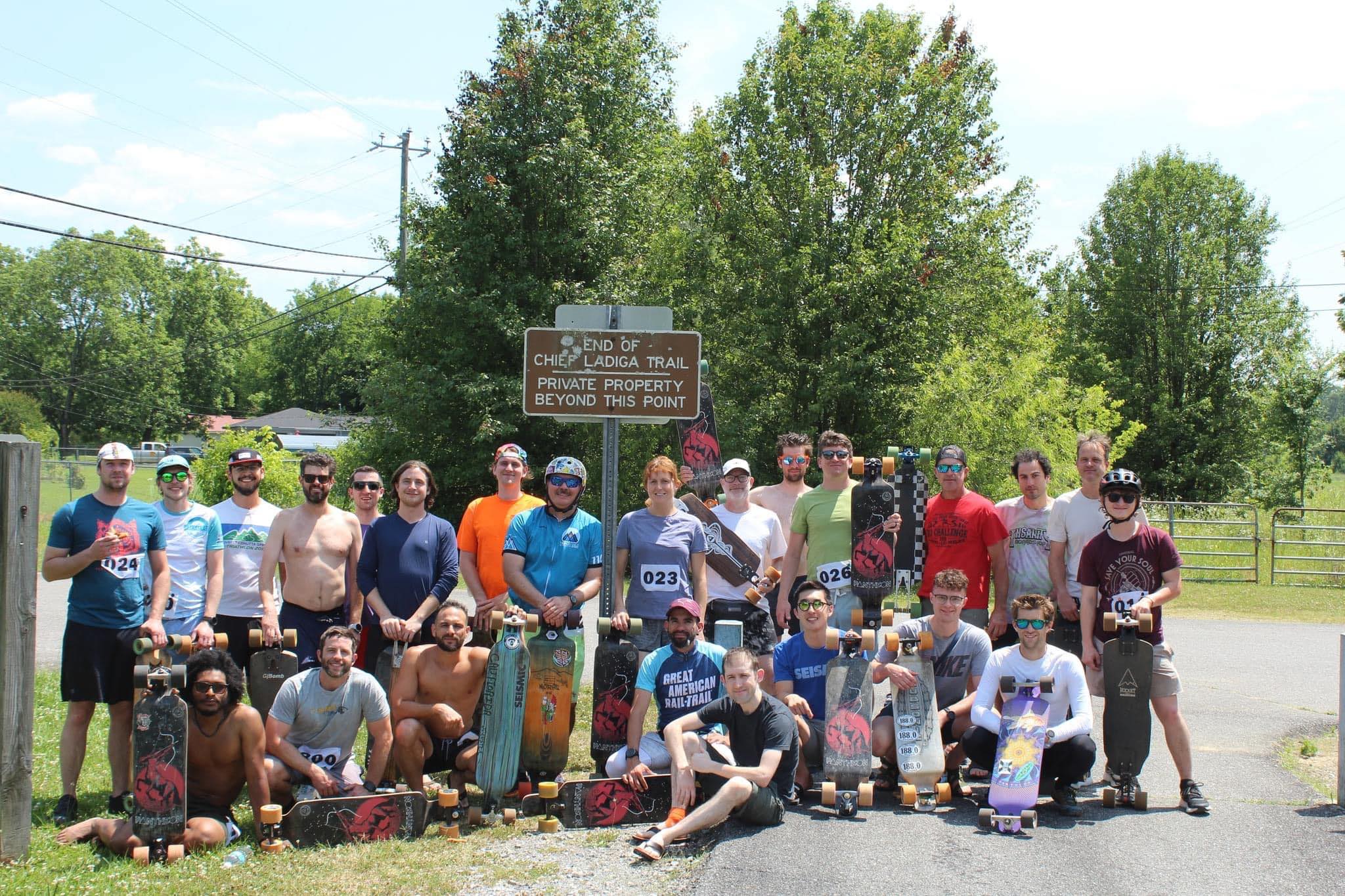
This takes me back to our customers. We are all real people, sharing real experiences through a thing we love. Some of us are here to move silently through the bigger picture — a dance with the outside world and gravity, fresh air, the sound of wind on a path shared with others. Some of us are here to feel capable, to push ourselves against the landscape, to accomplish something and be in command of our bodies in space. Some of us are mastering the art of balance in motion. A few of us are doing it on artificial legs.
Most of us want the same things.
Thank you, genuinely, for letting me exist in this space, providing for my family in the mountains of Colorado while doing something I care about. For this vehicle that I get to use to engage with the world. Send me your stories. I’ll keep sharing mine. And if you feel inclined, remember that we’re all in this thing together — across streets, borders, and cultures. Many of us on skateboards.
Thanks for the heartfelt and thoughtful blog Jeff, I think most people walking through this life would agree with your sentiment as do I. All day long I interact with people of many cultures and backgrounds either through direct contact, phone or email and I find, as the norm, we all get along just fine and even enjoy each other lol! Media of all kinds would try to convince us otherwise and give us many “reasons” why we should not like this group or that group but in the end, in real every day life, most people not only play nice with each other but also actually enjoy each other and I think that’s more real than anything we’ll ever see on tv or social media. Thanks again and by the way I own both the Pantheon/Loaded Trip and the bamboo supersonic and love them both! Keep up the good work and keep pushing the envelope!
Paul.
Jeff, this is one of the most beautiful pieces of writing I’ve read in a long time. Thank you for sharing these deep thoughts in a time when we need them.
Also, I’m still a happy customer who loves getting out and moving through space on my Pantheon Trip.
Nicely articulated Jeff.
The Pranayama is helping this introvert from Wales to dance a little more lightly through life.
Thanks for what you do and who you are.
Dave.